
MBABANE:The Eswatini Water and Agricultural Development Enterprise (EWADE) is accelerating efforts to ensure that every family affected by the construction of the landmark Mpakeni Dam is not left behind, Corporate Communications Manager Nokwazi Hlophe has confirmed.
With an unwavering commitment to inclusive development and dignity for all, EWADE has set its sights on completing the homestead resettlement programme by December 2025, three months ahead of its official March 2026 deadline.
The resettlement process forms a critical part of the Mkhondvo-Ngwavuma Water Augmentation Programme(MNWAP), a transformative R30billion national investment in water security, agricultural development, and rural empowerment.
Within this ambitious framework, the R2.6 billion Mpakeni Dam stands out, not just for its scale, but for the human-centred approach guiding its implementation.
But since the resettlement process began in January 2021, EWADE has made steady progress.
The Corporate Communications Manager said forty(40) homesteads, comprising fifty-eight(58) households, including five who selected their own resettlement sites, have been successfully relocated into modern, climate-resilient homes under Phase I.
These relocations have taken place in communities under Prince Gasawangwane and Prince Susa’s chieftaincies, including Makhava, Mngayi, Mphelamandla, Lulakeni, Mbava, KaLiba, Sitilo, and Nsingizini.
“This is not just a resettlement project-it’s a restoration of dignity, stability, and future prosperity,”
“We are not replacing homes.We are building sustainable communities that reflect the values, hopes, and aspirations of our people,” she said.
It has been disclosed that, each newly constructed home comes equipped with clean water tanks, electricity, ventilated improved pit (VIP) toilets, and energy-efficient stoves, ensuring access to basic services while promoting sustainable living. In contrast to earlier relocation efforts that relied heavily on owner builders, EWADE has now introduced a formal tendering system to improve quality assurance, accelerate timelines, and promote local contractor engagement.
Currently, Phase II is underway, with eight additional homesteads under construction through Boab Construction. Originally expected to conclude in April 2025, delays linked to payment hold-ups and weather disruptions have pushed the completion date to June 2025. Nonetheless, the investment in the resettlement programme has already surpassed E45.5 million, covering not just the construction of homes but fencing, fruit trees, VIP sanitation, and culturally sensitive grave relocation rituals.
To ensure that no household is left behind, the Government of the Kingdom of Eswatini has allocated E83 million in the 2025/26 fiscal year specifically for the final phase of resettlement.
This financial commitment signals the state’s prioritisation of social equity and developmental justice.
Beyond infrastructure, the resettlement programme is deeply rooted in community. Working closely with traditional leaders, EWADE has identified suitable relocation sites across chiefdoms such as Qomintaba (including Makhava, Lulakeni, and Mbava), Lushini (Chalaza and Mahhoca), and KaLiba. Site selection criteria focus on cultural relevance, access to services, and environmental suitability.
“We are finalising technical tender documents, including Bills of Quantities and site specifications, and will be advertising across multiple platforms before the end of April 2025,” Hlophe explained.
The tendering process, she added, will ensure transparency and allow qualified contractors to contribute meaningfully to national development.
What makes this programme truly distinct is EWADE’s commitment to restoring—not just resettling—livelihoods. Central to this is a comprehensive agricultural support package that empowers families to achieve food security. Each household receives tailored maize production support, including 300kg of fertiliser and 25kg of maize seed per hectare, helping families establish food gardens and rebuild their livelihoods during the transitional period.
“Our approach is not temporary relief.It’s long-term empowerment. We are equipping families with tools to thrive, not just survive,” said the Corporate Communications Manager.
MNWAP Project Coordinator Bafana Matsebula acknowledged that the journey has had its fair share of challenges, he cited delayed compensation payments due to government cash flow constraints and slowed contractor work as primary setbacks.
We’ve also experienced resistance from a few households, particularly in areas where families attempted to leverage resettlement to reignite chieftaincy disputes.The Government has now prioritised funding for the completion of this programme. With improved procurement processes and stronger collaboration with traditional leaders, we are on track to meet our goals,” he said.
As the resettlement programme gains momentum, EWADE continues to set the gold standard for responsible infrastructure development in Eswatini.
At the heart of the initiative is a recognition that development is only meaningful when it uplifts everyone it touches.
What EWADE is doing with the Mpakeni Dam resettlement is not merely ticking boxes, it is reshaping how development is done in the Kingdom.
With homes that are safer, stronger, and more sustainable; livelihoods that are supported and revived; and communities that are united and empowered, this programme is redefining what it means to build a nation.
When the final homestead is handed over, it won’t just mark the end of a relocation process.
It will signal the beginning of new possibilities, for the families, for the region, and for Eswatini’s development journey.
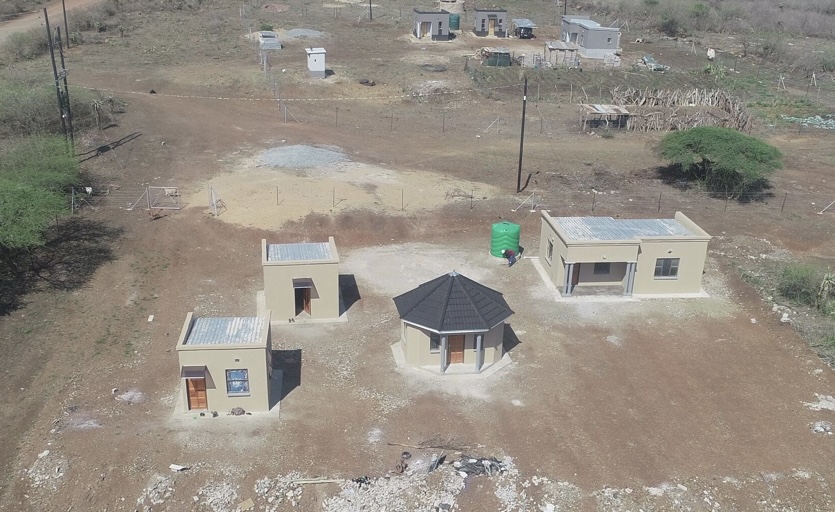
EWADE wants to finalize payments for emaSwati affected by the construction of R2.6billion Mpakeni Dam, families to share about R100million.